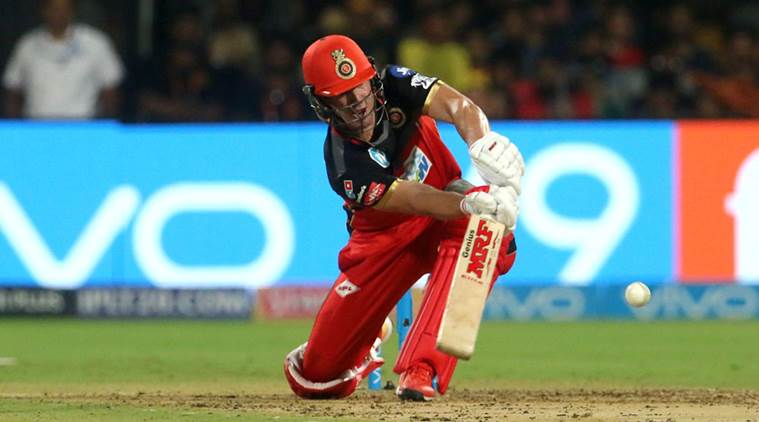

On January 18, 2015, the Wanderers Stadium in Johannesburg wasn’t just a cricket ground; it was a launchpad of Fastest Century in ODI History. Clad in pink for breast cancer awareness, South Africa took to the field against the West Indies, and by the end of the day, the cricketing world would never be the same.
While Hashim Amla and Rilee Rossouw had already set a massive platform with a 247-run opening stand, the arrival of AB de Villiers at the crease transformed a strong performance into a historic massacre.
The Perfect Storm: Context of the Innings
When Rossouw fell in the 39th over, the crowd expected David Miller. Instead, out walked the captain, AB de Villiers. He later admitted he didn’t even want to bat—he wanted Miller to go in—but coach Russell Domingo insisted.
What followed was 44 minutes of pure, unadulterated carnage.
The Milestone Breakdown
To understand the gravity of this feat, you have to look at the “gears” De Villiers shifted through. Most players take ten balls to find their timing; De Villiers took ten balls to destroy a bowling attack’s spirit.
| Milestone | Balls Taken | Previous Record Holder |
| Fastest 50 | 16 Balls | Sanath Jayasuriya (17 balls) |
| Fastest 100 | 31 Balls | Corey Anderson (36 balls) |
| Final Score | 149 (44 balls) | — |
Fastest Century in ODI History: How He Did It
De Villiers didn’t just hit the ball; he manipulated the field like a grandmaster playing speed chess. His 149 runs included 9 fours and 16 sixes, meaning 132 of his runs came in boundaries alone.
1. The 360-Degree Vision
This innings was the ultimate showcase of why he is called “Mr. 360.” He didn’t wait for the bowlers to miss their marks; he forced them to. By moving across the stumps or backing away, he made yorkers look like half-volleys and short balls look like gifts.
2. Mental Dominance
By the time he reached his fifty in 16 balls, the West Indian bowlers were visibly shaken. Jerome Taylor, Jason Holder, and Andre Russell—all world-class athletes—looked like they had nowhere to hide. De Villiers wasn’t just playing a sport; he was conducting a symphony of destruction.
“I was on 92 when I realized I was close to the record. I didn’t want to think about it, I just wanted to keep the momentum going for the team.” — AB de Villiers
The Legacy of 31 Balls Fastest Century in ODI History
Before this day, many thought Corey Anderson’s 36-ball century (set just a year prior in 2014) would stand for decades. Before Anderson, Shahid Afridi’s 37-ball record had stood for 17 years.
De Villiers didn’t just break the record; he took it to a place that feels unreachable for most human beings. It redefined the “death overs” strategy in ODI cricket, proving that with the right talent, no total is safe and no boundary is far enough.
Why this record might never be broken:
- The Strike Rate: He finished with a strike rate of 338.63. In an ODI, that is statistically anomalous.
- Consistency: Most “hitters” have a high dot-ball percentage. De Villiers, however, seemed to find a boundary or a gap on every single delivery.
- The Pressure: Doing this as a captain while maintaining perfect technical form is a feat of physical and mental coordination that few possess.
Statistical Highlights Fastest Century in ODI History
- Most Sixes in an Innings: He equaled the then-record of 16 sixes (shared with Rohit Sharma).
- Team Total: South Africa ended on 439/2, the second-highest ODI total at that time.
- Average per Over: During his stay, South Africa scored at an average of nearly 16 runs per over.
Final Thoughts
AB de Villiers’ 149 off 44 balls remains Fastest Century in ODI History the gold standard for limited-overs batting. It was a day where physics seemed optional and the boundary ropes felt like they were ten feet away. For those who watched it live, it wasn’t just a game of cricket; it was a “where were you?” moment in sporting history.
The record stands at 31 balls Fastest Century in ODI History. The question is: will anyone ever possess the audacity to challenge it?

 By
By