
Batting is one of the most crucial aspects of cricket. A good batsman can change the course of a match, but becoming a great batsman requires more than just raw talent. Improving your cricket batting technique is a blend of physical skill, mental sharpness, and strategic awareness. Whether you are a beginner or an experienced player, refining your technique can help you score consistently, handle different types of bowlers, and enjoy the game even more.
In this blog, we’ll explore the key elements of batting technique, drills to enhance your skills, common mistakes to avoid, and a comprehensive table of batting techniques for better understanding.
1. Understand the Basics of Batting Technique
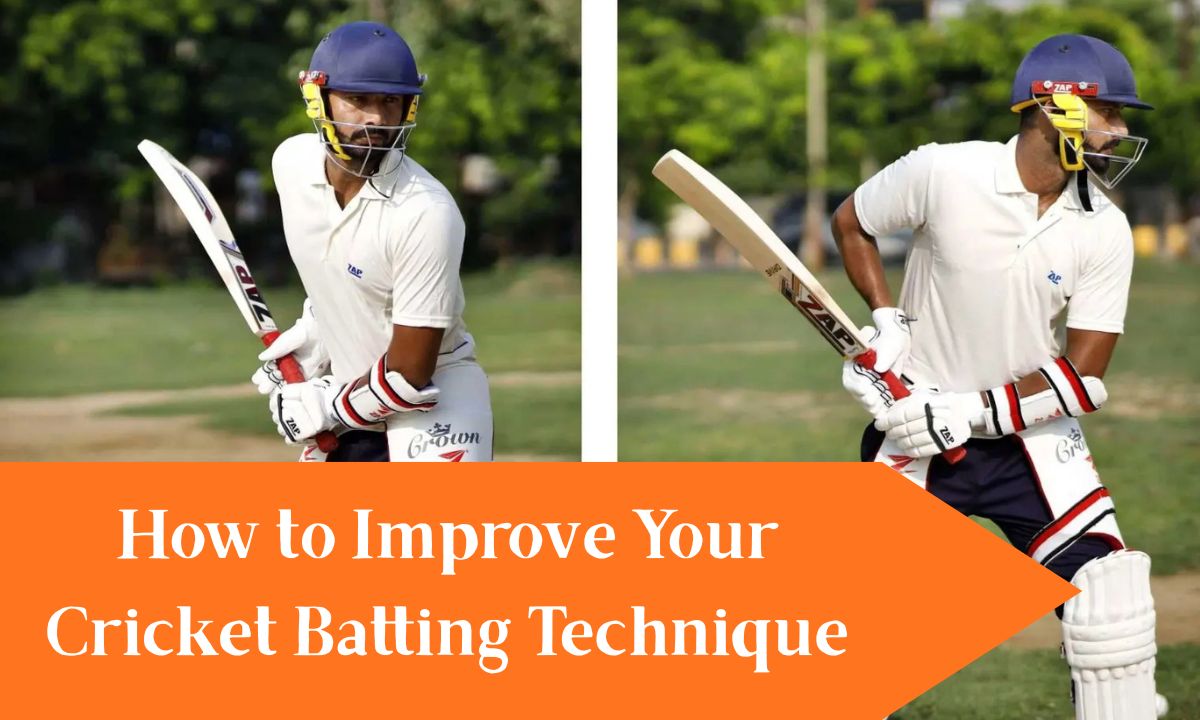
Before attempting advanced shots, mastering the basics is essential. These fundamentals form the foundation of every successful batsman:
✅ Stance
- Keep your feet shoulder-width apart.
- Bend your knees slightly for balance.
- Hold the bat comfortably, keeping your hands relaxed.
✅ Grip
- Use the “V” grip technique: the “V” formed by the thumb and index finger should point down the back of the bat.
- Maintain a firm but flexible grip to allow fluid movement of the wrists.
✅ Backlift
- Raise the bat straight back, either towards the slips or slightly towards leg slip depending on your style.
- A consistent backlift helps generate power and control.
✅ Footwork
- Move your feet quickly towards the pitch of the ball.
- Front foot forward for drives, back foot for cuts and pulls.
- Good footwork ensures balance and proper shot execution.
✅ Head Position
- Keep your head still and eyes level.
- Focus on watching the ball until it hits the bat.
2. Batting Techniques Table
Here’s a comprehensive table of essential cricket batting techniques:
| Technique | Description | When to Use | Common Mistakes |
|---|---|---|---|
| Forward Defense | Pushes the ball with a straight bat along the ground | To block full-length balls | Leaning back, lifting bat too early |
| Backfoot Defense | Uses the back foot to play short-pitched deliveries | Against bouncers or short balls | Weight on toes, off-balance shot |
| Drive (Cover Drive / Straight Drive) | Elegant shot played along the ground or slightly aerial | Full-length balls in line with stumps | Poor timing, dropping head |
| Pull Shot | Hit to short-pitched balls on leg side | Bouncer or short balls | Swinging wildly, missing the ball |
| Cut Shot | Hit to short-pitched balls outside off stump | Short and wide deliveries | Overreaching, mistiming |
| Sweep Shot | Cross-bat shot to spin bowling | Slow spin, low bouncing balls | Lifting head, losing balance |
| Hook Shot | Playing against short and rising balls | Bouncer aimed at the upper body | Missing the ball, top edge |
| Lofted Shot | Aerial shot over infield | To clear fielders and score boundaries | Risk of getting out, poor timing |
| Flick Shot | Uses wrists to hit ball on leg side | Full-length balls on leg stump | Top edge, weak placement |
| Reverse Sweep | Innovative shot to hit opposite side | Against spin bowlers to surprise | Poor execution, misjudging line |
3. Drills to Improve Batting Technique
1. Shadow Batting
- Stand in front of a mirror and practice footwork and shot selection.
- Helps correct stance, backlift, and follow-through without facing a ball.
2. Tennis Ball Drill
- Practice hitting a tennis ball with a cricket bat to improve hand-eye coordination.
- Safe for beginners and helps refine timing.
3. Throwdowns
- Coach or partner throws balls from different angles.
- Focus on technique, balance, and shot selection.
4. Net Practice
- Bat against bowlers or bowling machines in nets.
- Emphasize playing straight, correct footwork, and adjusting to pace.
5. Footwork Ladder Drill
- Use agility ladders to improve foot speed and balance.
- Essential for moving quickly against fast or spin bowling.
4. Mental Aspects of Batting
Cricket is as much a mental game as it is physical. Great batsmen have sharp mental skills:
- Concentration: Focus on every ball, avoiding distractions.
- Patience: Play long innings without rushing shots.
- Confidence: Trust your technique and decision-making.
- Situational Awareness: Understand field placements, bowler’s strategies, and match conditions.
5. Common Mistakes to Avoid
Even skilled players often make mistakes that affect performance:
- Poor Stance: Leads to imbalance and mistimed shots.
- Backlift Issues: Inconsistent backlift reduces power and control.
- Neglecting Footwork: Poor foot movement makes handling spin and pace difficult.
- Watching the Ball Late: Missing crucial deliveries or edges the ball.
- Overreliance on Power: Sacrificing technique for big hits often leads to dismissals.
6. Tips for Continuous Improvement
- Practice Regularly: Daily nets or shadow batting improve consistency.
- Record and Analyze: Video your batting to spot mistakes.
- Seek Feedback: Work with coaches to refine technique.
- Play Different Formats: Test yourself in T20, ODI, and Test styles.
- Stay Physically Fit: Strength and flexibility enhance shot execution.
7. Advanced Batting Techniques
Once you master the basics, you can add advanced skills:
- Switch Hit: Hitting the ball in the opposite stance for spin variations.
- Helicopter Shot: Wrist-heavy shot to hit yorkers for boundaries.
- Scoop/Reverse Scoop: Innovative shots against spin bowling.
- Use of Depth in Footwork: Learning when to leave, step in, or step back.
8. Equipment and Its Role
Having the right equipment enhances batting technique:
- Bat: Choose the correct weight and size.
- Gloves: Proper fit ensures comfort and grip.
- Pads and Helmet: Protect against fast bowling, allowing confident stroke play.
- Shoes: Cricket shoes with spikes improve stability and quick foot movement.
9. Summary
Improving your cricket batting technique is a step-by-step process. Start with fundamentals like stance, grip, backlift, and footwork. Learn various shots, practice regularly with drills, and maintain mental focus. Avoid common mistakes, experiment with advanced shots, and use appropriate equipment.
By combining physical practice, mental preparation, and tactical awareness, you can take your batting to the next level. The table of batting techniques provided here serves as a reference for beginners and professionals alike to understand when and how to play each shot effectively.
Remember, consistency is key. Every great batsman started by perfecting the basics before attempting the spectacular.
⚡ Quick Reference Table of Batting Techniques
| Technique | Description | When to Use | Common Mistakes |
|---|---|---|---|
| Forward Defense | Pushes the ball with a straight bat along the ground | To block full-length balls | Leaning back, lifting bat too early |
| Backfoot Defense | Uses the back foot to play short-pitched deliveries | Against bouncers or short balls | Weight on toes, off-balance shot |
| Drive (Cover Drive / Straight Drive) | Elegant shot played along the ground or slightly aerial | Full-length balls in line with stumps | Poor timing, dropping head |
| Pull Shot | Hit to short-pitched balls on leg side | Bouncer or short balls | Swinging wildly, missing the ball |
| Cut Shot | Hit to short-pitched balls outside off stump | Short and wide deliveries | Overreaching, mistiming |
| Sweep Shot | Cross-bat shot to spin bowling | Slow spin, low bouncing balls | Lifting head, losing balance |
| Hook Shot | Playing against short and rising balls | Bouncer aimed at the upper body | Missing the ball, top edge |
| Lofted Shot | Aerial shot over infield | To clear fielders and score boundaries | Risk of getting out, poor timing |
| Flick Shot | Uses wrists to hit ball on leg side | Full-length balls on leg stump | Top edge, weak placement |
| Reverse Sweep | Innovative shot to hit opposite side | Against spin bowlers to surprise | Poor execution, misjudging line |

 By
By