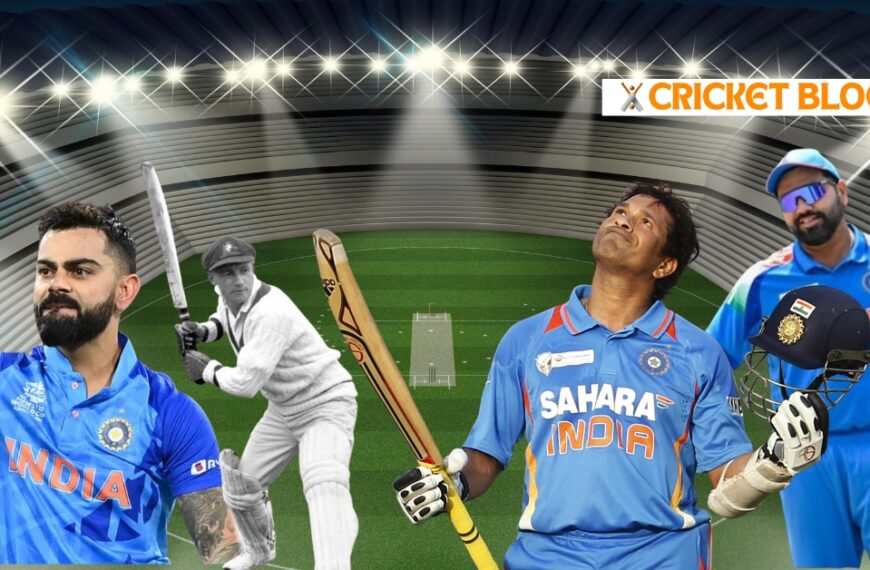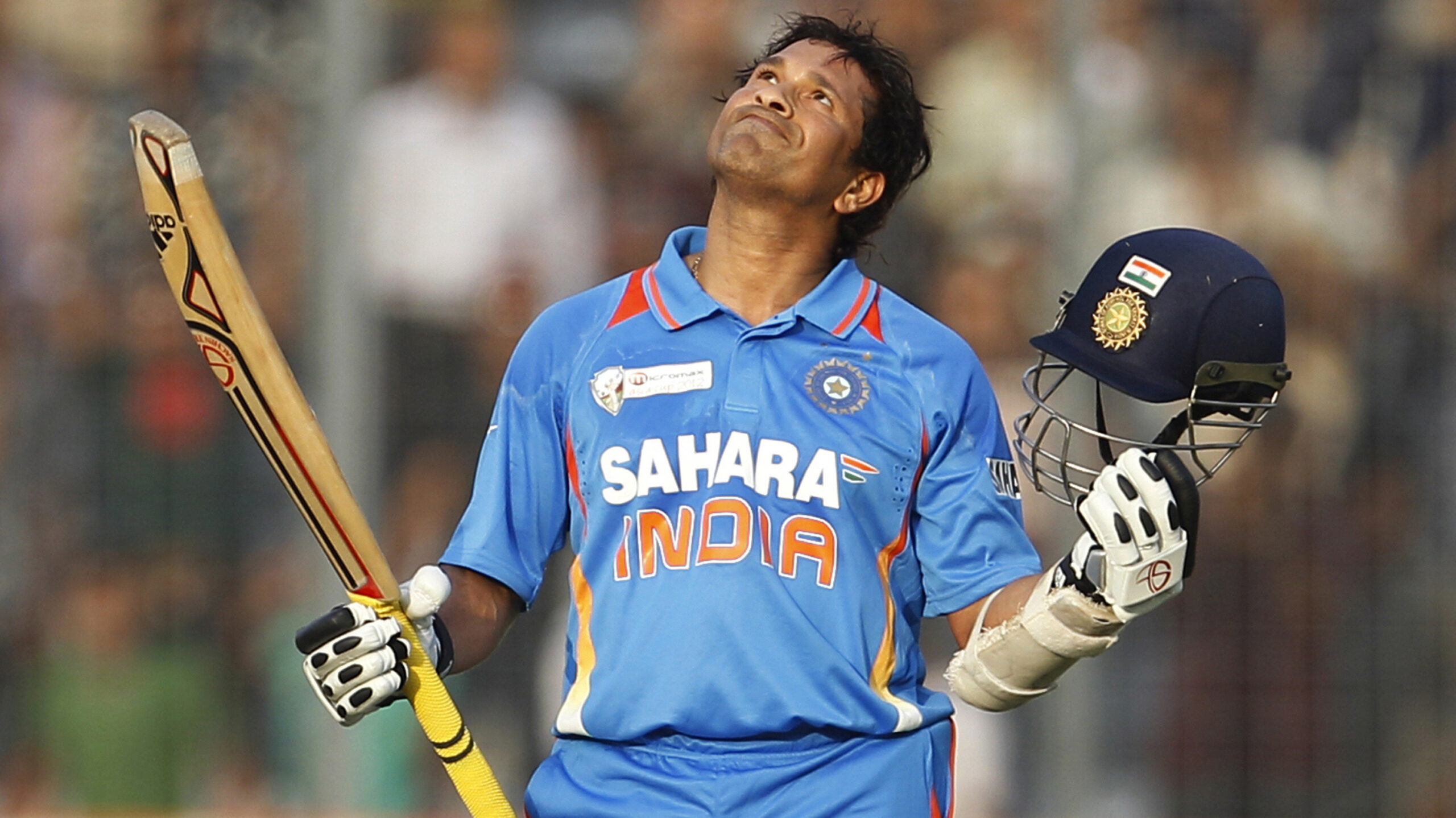

Sachin Ramesh Tendulkar is not merely a cricketer; he is a phenomenon that shaped world cricket for more than two decades. For millions of fans across the globe, Sachin represents dedication, humility, and the purest form of batting excellence ever witnessed. From the narrow lanes of Mumbai to the biggest stadiums in the world, his journey is a masterclass in passion meeting discipline.
This detailed biography explores Sachin Tendulkar’s early life, cricket development, rise to stardom, international records, iconic moments, World Cup experiences, IPL career, personal life, awards, and his lasting legacy.
Early Life – The Making of a Prodigigy
Sachin Tendulkar was born on 24 April 1973 in Mumbai to a middle-class Maharashtrian family. His father, Professor Ramesh Tendulkar, was a respected writer and poet, while his mother, Rajni, worked in the insurance sector. Sachin was the youngest of four siblings.
As a child, Sachin was energetic, mischievous, and competitive. Initially, he was more fascinated with tennis, idolizing John McEnroe. But everything changed when his elder brother, Ajit Tendulkar, recognized his natural ability to connect with the cricket ball.
Ajit introduced Sachin to Ramakant Achrekar, one of Mumbai’s most renowned cricket coaches. Achrekar immediately saw something extraordinary in the young boy — his sharp focus, balance, and natural timing. It was on the grounds of Shivaji Park that Sachin’s foundation as a cricketer was built.
Sachin would often play back-to-back practice matches in a single day to improve stamina and technique. Achrekar used to place a one-rupee coin on the stumps and told bowlers, “If you get him out, the coin is yours.” Each coin Sachin earned for staying not out became a personal treasure.
By age 12, Sachin was already known in Mumbai’s cricket circles. By 14, he was scoring centuries in school tournaments with alarming consistency.
School Cricket Dominance
In 1988, Sachin, along with his friend and batting partner Vinod Kambli, stitched a record 664-run partnership in a school cricket match for Sharadashram Vidyamandir. Sachin scored an unbeaten 326 in that innings, an achievement that got national media attention.
This partnership is considered one of the most important turning points in his early career, marking him as a future star of Indian cricket.
Entry into Domestic Cricket
Sachin made his Ranji Trophy debut for Mumbai in 1988 at the age of 15 years and 232 days, becoming the youngest Ranji player ever at that time. And just like a prodigy would, he scored a century on debut, remaining unbeaten on 100.
He repeated this stunning debut feat in Duleep Trophy and Irani Trophy, scoring centuries in his first match in each tournament. These performances sealed his spot in the Indian team.
Sachin’s Domestic Debut Table
| Tournament | Debut Year | Score |
|---|---|---|
| Ranji Trophy | 1988 | 100* |
| Duleep Trophy | 1989 | 103* |
| Irani Trophy | 1989 | 138 |
Such dominance at such a young age was unheard of in Indian cricket.
International Debut – Baptism by Fire
Sachin made his international debut in November 1989 against Pakistan at the age of 16 years and 205 days, becoming one of the youngest debutants in cricket history.
Facing a bowling lineup that included Wasim Akram, Waqar Younis, and Imran Khan, Sachin showed immense courage despite being hit on the nose by Waqar Younis. Blood was flowing, but Sachin refused to walk off, saying:
“Main khelega.” (I will play.)
That one moment defined his spirit for the rest of his career.
The Build-Up Years – Consistency and Growth (1990–1995)
Sachin’s first international century came in 1990 at Old Trafford, where an unbeaten 119 helped India save the match against England. His technique under pressure impressed the world.
Between 1990 and 1995, Sachin matured rapidly:
- Scored centuries in Australia, England, South Africa.
- Became India’s most dependable batter.
- Took on the role of leading India’s batting at just 19.
By 1992, he was also the youngest foreign player to play county cricket for Yorkshire.
Sachin’s Golden Era – Peak Mastery (1996–2003)
This period is widely considered Sachin’s finest phase.
1996 Cricket World Cup
Sachin was the highest run-scorer of the tournament with 523 runs. His performances single-handedly carried India.
1998 – The Desert Storm Year
The year 1998 is legendary in Sachin’s career. He dominated Australia like no batter before him.
The Desert Storm Innings vs Australia
In Sharjah, Sachin scored:
- 143 (famous Desert Storm innings)
- 134 (final)
Both innings came against a world-class Australian attack. Shane Warne once said:
“I have nightmares of Sachin running down the wicket and hitting me for six.”
Dominance in Australia
In 2000 and 2001, Sachin played memorable innings against world-class bowlers like McGrath and Brett Lee.
The Transformation – Shoulder Surgery & Reinvention (2004–2007)
Sachin suffered a major tennis elbow injury in 2004. Many experts thought his career might be over. But Sachin came back stronger, reinventing his batting, focusing more on timing and placement than pure aggression.
His 2007 World Cup performance wasn’t memorable, but he took that failure personally and promised to return stronger.
The Second Golden Run (2008–2011)
After 2008, Sachin entered another purple patch.
- Scored match-winning 117* against Australia in CB Series final.
- Played a near-perfect 175 against Australia in 2009.
- Became the first ever player to score a double century in ODI cricket (200* vs South Africa, 2010).
- Reached peak form heading into the 2011 World Cup.
2011 ICC Cricket World Cup – The Ultimate Glory
The 2011 World Cup was the most emotional chapter of Sachin’s career.
India’s team, including Dhoni, Yuvraj, Sehwag, and Kohli, repeatedly said they wanted to win it for Sachin.
Sachin scored two centuries in the tournament and finished as India’s highest run-scorer.
After India won the final, Virat Kohli famously said:
“He has carried the burden of the nation for 21 years. It was time we carried him on our shoulders.”
It is one of the greatest moments in cricket history.
Final Years & Retirement (2012–2013)
Sachin played his 200th and final Test match in Mumbai in November 2013. His farewell speech would remain one of the most emotional moments in sports.
With his retirement, cricket ended an era.
Full International Career Stats
Sachin Tendulkar International Stats Table
| Format | Matches | Runs | Average | 100s | 50s | Best Score |
|---|---|---|---|---|---|---|
| Test | 200 | 15,921 | 53.78 | 51 | 68 | 248* |
| ODI | 463 | 18,426 | 44.83 | 49 | 96 | 200* |
| T20I | 1 | 10 | – | 0 | 0 | 10 |
| International Total | 664 | 34,357 | – | 100 | 164 | 248* |
Sachin is the only cricketer ever to score:
- 100 international centuries
- 30,000+ international runs
IPL Career of Sachin Tendulkar
Sachin played for Mumbai Indians (MI) and later became a mentor of the team.
IPL Stats Table
| Attribute | Details |
|---|---|
| Team | Mumbai Indians |
| Matches | 78 |
| Runs | 2,334 |
| Centuries | 1 |
| Orange Cap | 2010 – 618 runs |
| Role | Opener |
His elegant batting proved that technique works even in T20 cricket.
Personal Life of Sachin Tendulkar
Sachin married Dr. Anjali Mehta in 1995. They have two children:
- Sara Tendulkar
- Arjun Tendulkar (professional cricketer)
Sachin is deeply involved in philanthropy, child welfare programs, and sports development projects.
He also served as a Rajya Sabha Member of Parliament.
Awards and Honours
Awards Table
| Award | Year |
|---|---|
| Arjuna Award | 1994 |
| Rajiv Gandhi Khel Ratna | 1997 |
| Padma Shri | 1999 |
| Padma Vibhushan | 2008 |
| ICC Cricketer of the Year | 2010 |
| Bharat Ratna | 2014 |
Sachin is the youngest recipient of the Bharat Ratna, India’s highest civilian award.
Sachin’s Legacy – More Than Just Records
Sachin’s legacy is not just about runs or centuries. His real contribution lies in:
1. Inspiring a Generation
Players like Kohli, Rohit, Dhoni, and Sehwag grew up idolizing Sachin.
2. Changing India’s Cricket Culture
He brought professionalism, discipline, and global respect to Indian cricket.
3. Global Ambassador of the Sport
Sachin’s humble nature made him beloved worldwide, even among opponents.
4. A Symbol of Hope
For millions of Indians, Sachin represented dreams, resilience, and pride.
Why Sachin Tendulkar Will Always Remain Special
Whether it was his straight drive, cover drive, late cut, or flick off the pads, Sachin’s batting felt like poetry in motion. His dedication, humility, and love for the game make him far more than just a sportsman.
Sachin once said:
“I never tried to compare myself with anyone else. I just wanted to be the best version of Sachin Tendulkar.”
And that version became a legend.
Conclusion
Sachin Tendulkar’s life is the perfect example of how passion, discipline, and resilience can turn a dream into a global story. He entered cricket as a child prodigy, dominated the game as a master, and left as a legend.

 By
By